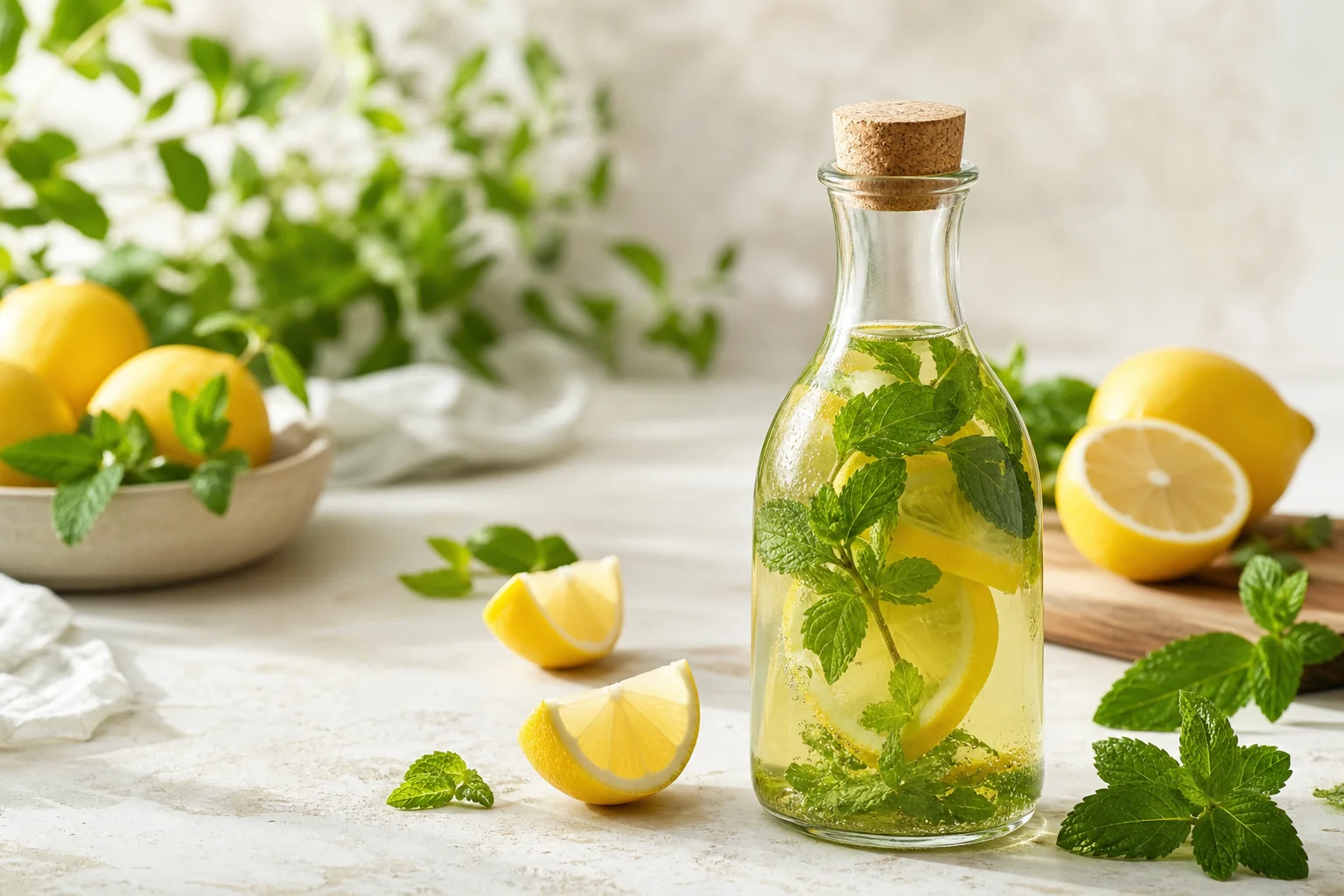
Citrus mint vinegar is Four Monks' answer when plain acid feels too stark for summer produce. Infused citrus and mint notes add brightness without requiring you to zest lemons or muddle herbs every time you dress a salad.
Use it as a finishing vinegar rather than a pickling base — the flavor is designed to complement fresh vegetables, grilled seafood, and light grains. A tablespoon transforms cucumber salad or grilled corn with minimal effort.
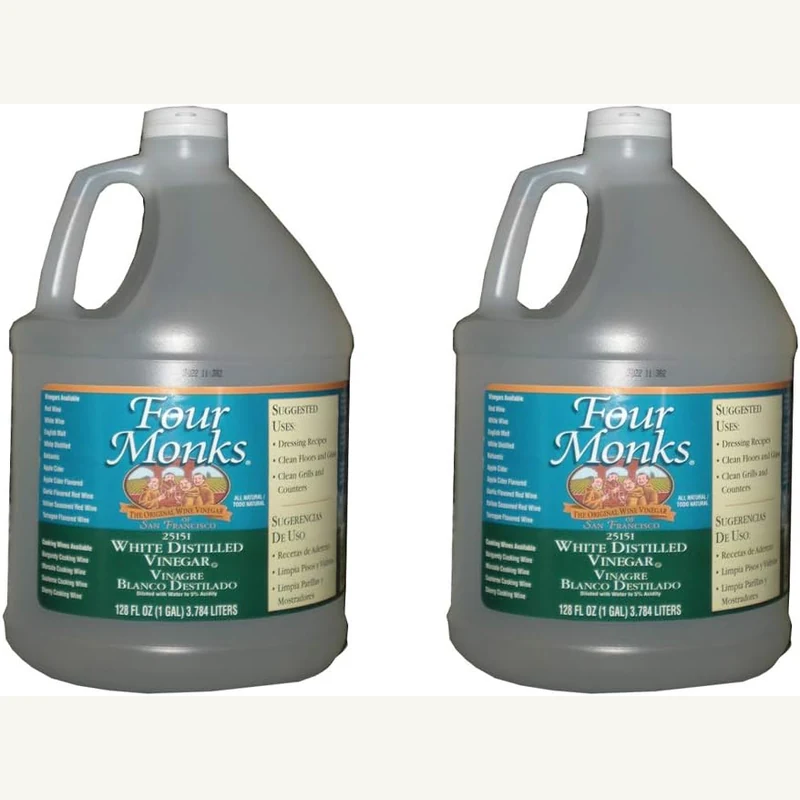
When you need neutral brine acid, switch to white vinegar. For hearty winter sauces, see red wine vinegar.
Summer salad pairings
Whisk citrus mint vinegar with light olive oil, salt, and cracked pepper for tomato-cucumber salads. The mint note echoes fresh herbs in the bowl without extra chopping.
Watermelon and feta salads gain lift from a light drizzle at the table — add just before serving so mint aroma stays vivid.
Grilled vegetables
Brush grilled zucchini, eggplant, and corn with a mix of citrus mint vinegar and olive oil right off the heat. Acid cuts char sweetness while mint cools the palate.
Avoid marinating raw vegetables too long in strong acid — thirty minutes maximum for delicate squash slices.
Seafood finishing
Splash a teaspoon over grilled shrimp or pan-seared white fish after plating. The citrus brightness mirrors lemon wedge tradition with added herbal complexity.
Do not boil seafood in infused vinegar — high heat drives off aromatic oils. Finish at the table instead.
Drinks and shrubs
A small amount stirred into sparkling water makes a quick shrub-style refresher. Sweeten lightly with honey if desired. This is a culinary use, not a health tonic — enjoy for flavor.
Always label infused vinegar bottles clearly if you decant into serveware.
Not for cleaning
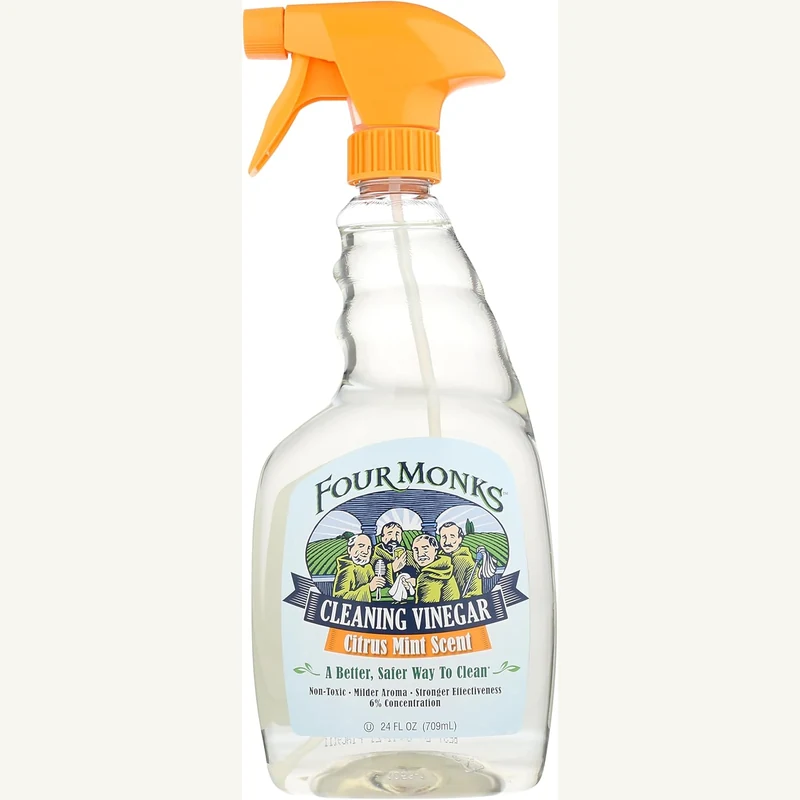
Infused vinegars are cooking products only. Mint and citrus oils can leave residue on surfaces. Use white distilled vinegar for household dilution tasks.
Never combine with bleach or apply to natural stone.
Size and storage
Twelve-ounce bottles stay fresh through a grilling season for most couples. Thirty-two-ounce bottles suit households that host weekly cookouts.
Store away from heat and direct sun to preserve mint aroma. Cap tightly after each use.
Picnic and patio service
Pack citrus mint vinegar for outdoor dining where lemon wedges would bruise in transit. A small bottle in the cooler handles salad, grilled shrimp, and fruit platters with one versatile pour.
Mix with olive oil in a squeeze bottle for corn on the cob stations at backyard parties — guests self-serve without separate dressing prep.
Herb garden synergy
If you grow mint, citrus mint vinegar extends harvest flavor into weeks when fresh leaves turn bitter in heat. Use infused vinegar when fresh herbs look wilted but you still want brightness.
Combine fresh mint leaves as garnish even when using infused vinegar — visual cue helps guests expect herbal notes.
Light protein focus
Tofu and chicken breast salads aimed at meal prep benefit from citrus mint because the profile feels lighter than malt or red wine. Acid lifts without weighing down lean protein bowls.
Avoid long acid marinades on delicate fish — thirty minutes maximum for citrus mint profiles on tilapia or sole fillets.
Farmers market hauls
Summer market bags of zucchini, corn, and tomatoes need fast cooking. Citrus mint vinegar finishes grilled platters when you lack time for composed dressings.
Keep bottle near the grill station during peak harvest weeks — one less prep bowl to wash.
Cocktail party shortcuts
Not a cocktail ingredient — but citrus mint splashed on crudité platters gives hosts a chef-y finish without hiring caterers. Guests notice brightness even if they cannot name the ingredient.
Avoid confusing culinary vinegar with drinking vinegars unless labels explicitly say so.
Winter storage
Buy citrus mint before grilling season ends if you use it heavily — infused flavors stay stable sealed, but holiday clearance aisles may not restock until spring.
Opened bottles stored cool and dark retain character through fall tailgate season easily.
Tomato and cucumber bowls
Peak summer tomatoes and cucumbers need only olive oil, citrus mint vinegar, and flaky salt — minimal prep, maximum refreshment on humid evenings.
Serve bowls chilled; acid perception sharpens when vegetables are cold.
Leftover grain refresh
Day-old quinoa and rice salads revive with citrus mint splash and chopped herbs — cheaper than remaking sides from scratch.
Toss just before eating so grains do not soak into mush.
Brunch plating
Avocado toast with citrus mint drizzle sells the herbal note visually — guests taste brightness before the first bite.
Pair with sparkling water brunch service for light weekend menus without heavy hollandaise.
Hosts keeping one bottle through summer report fewer half-used dressing jars cluttering fridge doors — one infused acid covers multiple warm-weather menus without separate lemon and mint prep.
Written by Priya Desai, seasonal cooking writer focused on herbs, grilling, and bright finishing acids