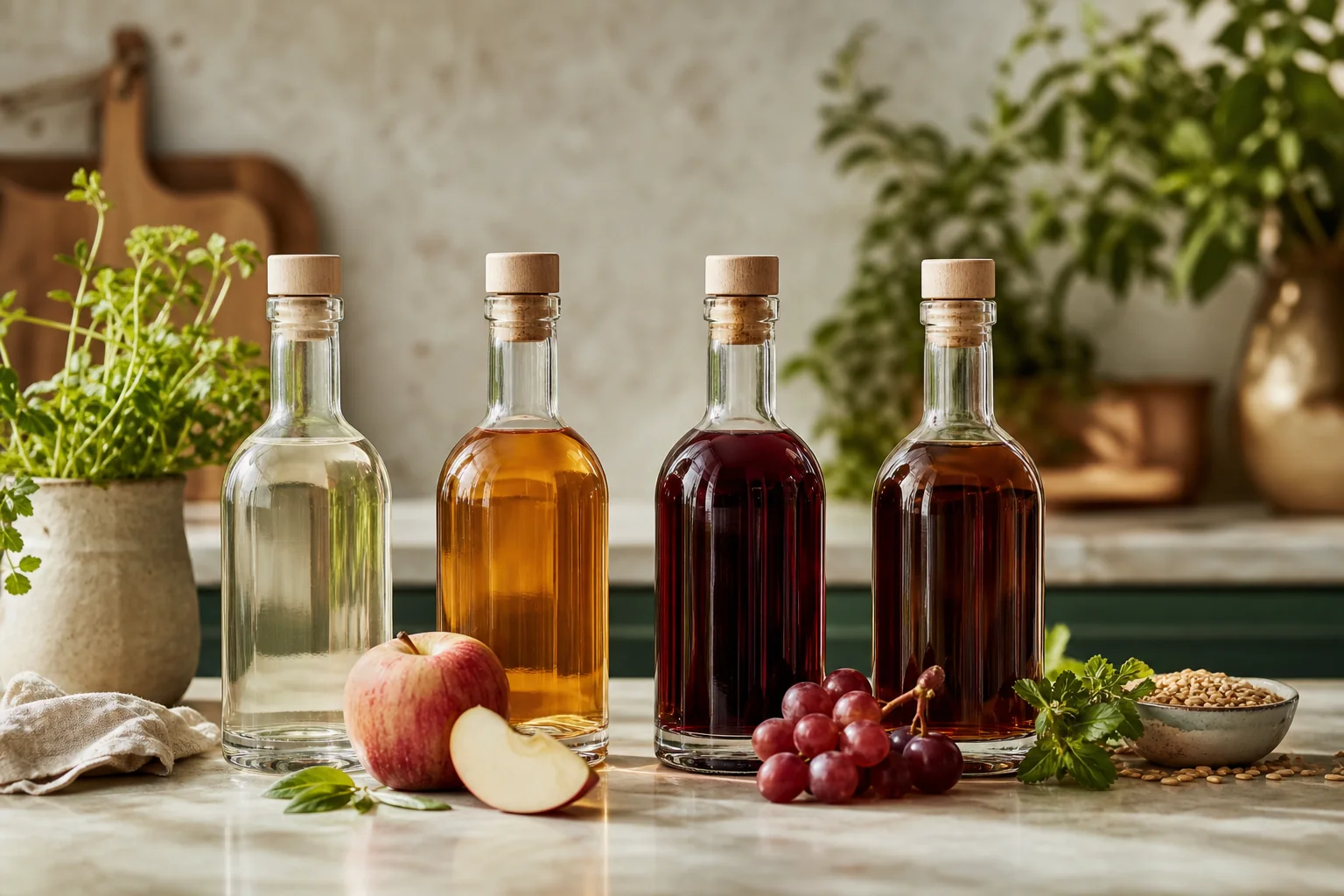
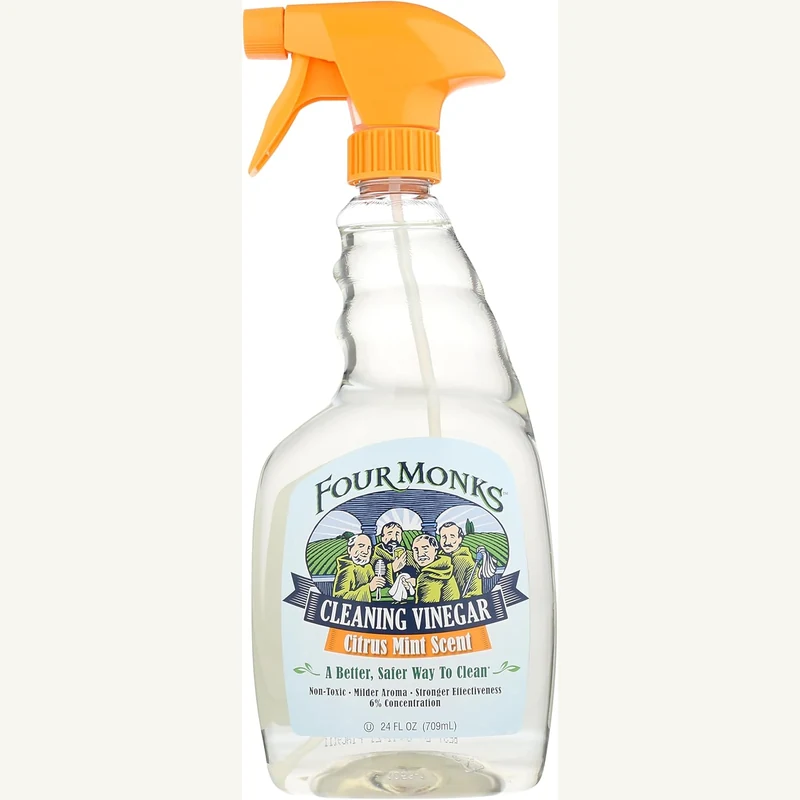
Every Four Monks bottle starts with fermented acetic acid — the compound that gives vinegar its tang and preserving power. What changes from variety to variety is the starting ingredient: grain alcohol for white distilled, barley malt for malt, apples for cider, and red wine grapes for wine vinegar.
Most cooking vinegars target roughly 5% acidity, the level many pickling and dressing recipes assume. Consistent acidity is why commercial kitchens trust branded vinegar instead of switching between unknown bulk sources.
Read variety-specific guides for recipe ideas: white, malt, cider, red wine, and citrus mint.
Acidity explained
Acidity percentage tells you how much acetic acid is in the bottle. At 5%, vinegar is strong enough to inhibit many spoilage organisms in pickles and dressings when recipes are followed correctly.
Higher acidity is not automatically better for taste — it is a functional measurement. Cooking vinegars balance flavor with sufficient acid for food safety in preserved recipes.
White distilled base
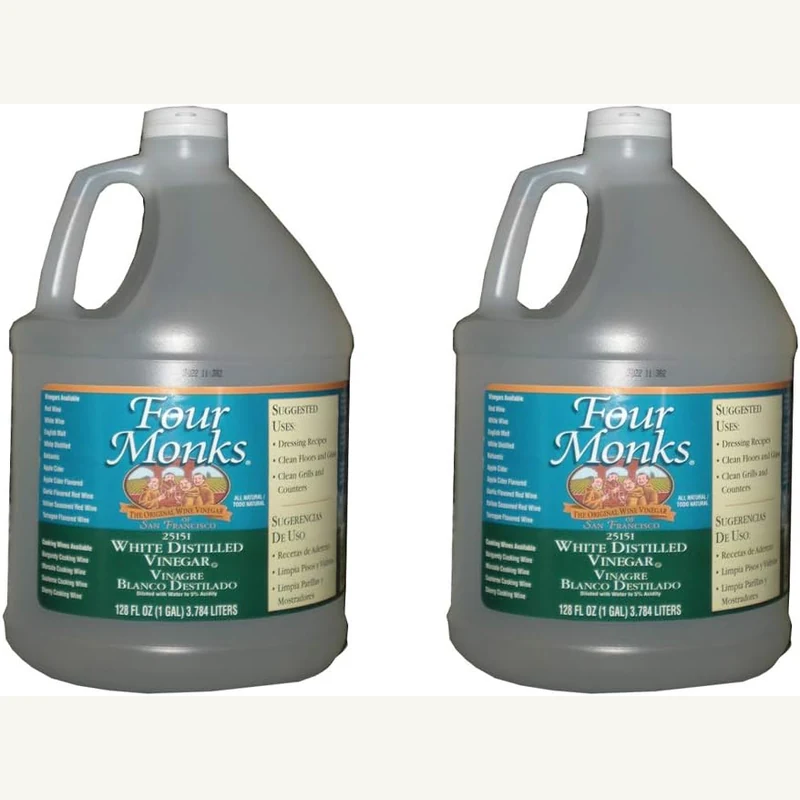
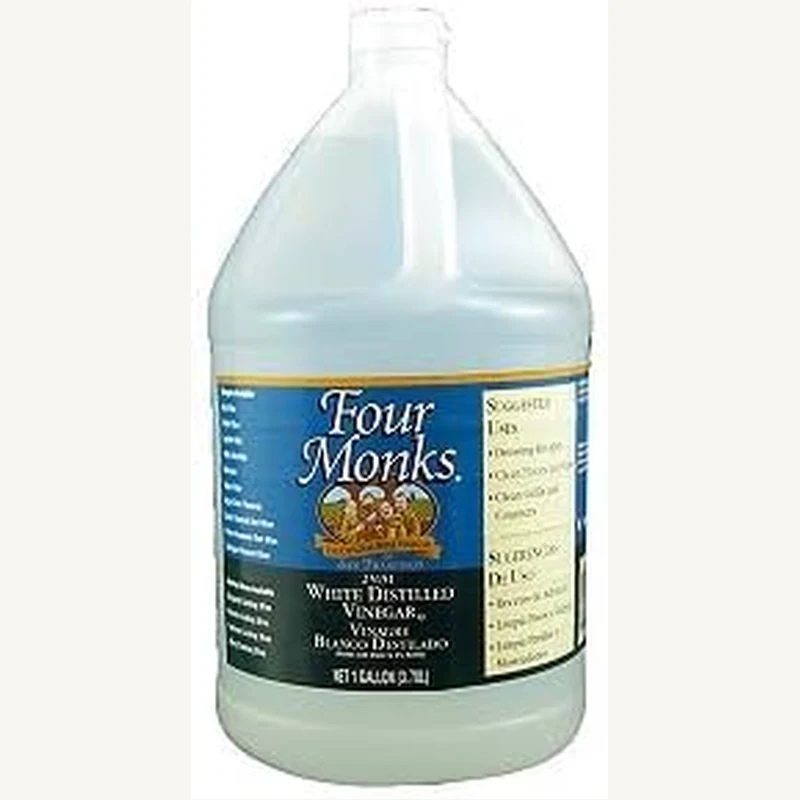
White distilled vinegar starts from grain alcohol fermented into acetic acid, then diluted to bottling strength with water. Filtration removes color and most congeners, yielding neutral acid ideal for pickling clarity.
This is the variety approved for most diluted household cleaning when used properly on compatible surfaces.
Malt and grain notes
Malt vinegar ferments from barley malt, retaining color and malty flavor compounds. Labeling typically lists malt vinegar and water; some versions include caramel color for consistency.
The ingredient list explains why malt darkens pale pickles — plan recipes accordingly.
Fruit and wine bases
Apple cider vinegar lists apple-derived vinegar and water. Red wine vinegar lists wine vinegar and water. Both retain fruit or grape character because the base fermentation differs from neutral grain alcohol.
Citrus mint begins with white vinegar infused with natural citrus and mint flavors — check labels for exact infusion wording.
Water and filtration
Dilution water adjusts acidity to safe, usable levels. Filtration clarifies vinegar and extends shelf stability. Sediment is uncommon in filtered commercial vinegars like Four Monks.
Refrigeration is optional for opened bottles; cap tightly to prevent slow evaporation that concentrates acid unevenly.
Safety reminders
Vinegar is acidic. Avoid contact with eyes and open wounds. Never mix with bleach. Never use on granite, marble, or natural stone regardless of variety.
Cooking and cleaning are separate use cases — match white distilled for cleaning, character vinegars for flavor.
Label reading guide
Check the ingredient panel for vinegar type first, then acidity if listed. Words like distilled, malt, cider, wine, and infused tell you flavor direction before you open the bottle.
Water on the label is normal — vinegar is diluted to safe, usable acidity for food. Undiluted acetic acid is corrosive and not sold as cooking vinegar.
Allergen considerations
Malt vinegar derives from barley; people with gluten sensitivity should consult healthcare guidance on malt-derived products. White distilled from grain alcohol is a different fermentation path — read labels if allergies apply.
Wine vinegar may matter for sulfite-sensitive individuals depending on source wine — when in doubt, choose distilled white for neutrality.
Comparison shopping
Store brands vary in acidity and filtration. Four Monks positions as consistent mid-shelf quality — not the cheapest gallon, not imported artisanal, but reliable for daily cooking and pickling.
When comparing prices, calculate cost per ounce and note bottle shape — wide gallon jugs store differently than tall liter bottles in pantry spaces.
pH and kitchen science
Vinegar acidity correlates with pH — lower pH means stronger acid. Cooking vinegar typically lands around pH 2.4 to 3.0 depending on dilution. That is why undiluted contact with stone and metal matters.
Measuring pH at home is optional; following label acidity and trusted recipes is enough for most cooks.
Preservative role
Acetic acid inhibits many bacteria in pickled environments when salt and refrigeration cooperate. Vinegar is not a universal preservative — wrong ratios still spoil food.
Trust recipes from extension services and tested canning guides when preserving beyond refrigerator pickles.
Imported versus domestic
Imported wine vinegars may carry appellation language on labels. Four Monks focuses on accessible domestic production for grocery and food-service channels nationwide.
Domestic sourcing often means faster shelf turnover at big-box grocers — fresher stock in high-volume stores.
Bottle materials
Four Monks bottles use food-grade plastic or glass depending on size and channel — check recycling codes locally when empty.
Rinse bottles before recycling; vinegar residue is harmless but sticky labels vary by municipality rules.
Transparency commitment
Ingredient pages should answer what is inside without marketing fog — fermentation source, dilution water, and variety-specific additions are what matter on the label.
When brands hide behind vague natural flavor language, compare against varieties with clear vinegar type listed first.
Written by Dr. Helen Marsh, food science educator explaining vinegar fermentation, acidity, and safe kitchen use