

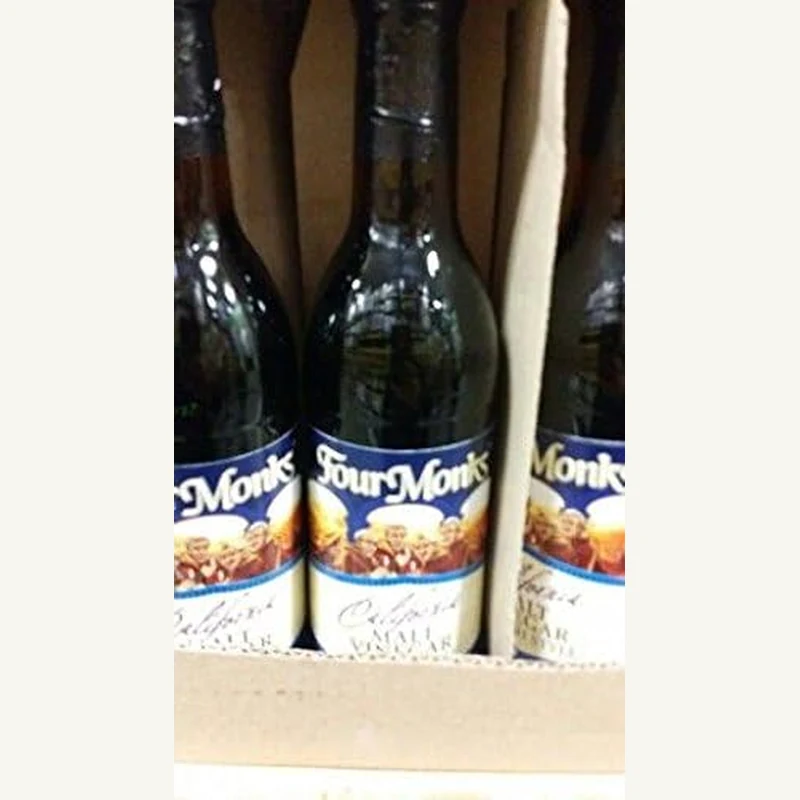
Malt vinegar carries a distinctive malty roundness that white distilled vinegar cannot replicate. Four Monks malt vinegar is the bottle you crack open when battered cod leaves the fryer or when roasted potatoes need a sharp finishing splash.
The flavor comes from barley malt fermentation, which adds caramel notes and a savory backbone. That depth works in warm dressings for cabbage slaws, in brown sauce reductions, and anywhere you want acid with character rather than neutrality.
Pair malt with our white vinegar for pickling and keep malt dedicated to finished plates where its color and taste belong.
Fish and chips
The classic pairing is simple: hot fried fish, crisp chips, and malt vinegar sprinkled tableside. The acid cuts through oil without making the batter soggy if you add it at the last moment.
At home, drain fried items on a rack, salt immediately, then mist malt vinegar across the top. The malt sweetness balances flaky white fish and starchy potatoes beautifully.
Savory dressings
Whisk malt vinegar with brown mustard, a touch of honey, and neutral oil for a dressing that suits shredded cabbage and roasted root vegetables. The malt note complements earthy flavors better than sharp white acid.
Use sparingly in mayonnaise-based sauces — start with half the vinegar you would use with white and adjust. Malt can dominate delicate herbs if overdosed.
Marinades and glazes
Malt vinegar tenderizes and flavors beef strips for stir-fry when combined with soy sauce and ginger. Its rounded acid penetrates meat without the harsh edge of distilled vinegar.
Reduce malt with stock and butter for a quick pan glaze on sausages or pork chops. The caramel tones in the vinegar echo browned meat fond.
Not for every surface
Malt vinegar is a cooking condiment, not a general household cleaner. Its color and scent make it a poor choice for glass spray bottles and laundry rinse. Stick with white distilled for diluted cleaning tasks.
Never apply any vinegar to natural stone or mix with bleach. Safety rules apply regardless of variety.
Flavor comparison
Versus cider vinegar, malt is darker and more savory. Versus red wine, it is less fruity and more pub-forward. Versus citrus mint, it is heavier and better suited to fried and roasted dishes.
If you cook British-inspired comfort food even once a month, a 12 oz table bottle earns its shelf space.
Storage tips
Keep malt vinegar capped in a cool pantry. Like all vinegars, it is shelf-stable. Avoid storing open bottles next to heat sources that accelerate evaporation and concentrate flavor unevenly.
Wipe bottle necks after pouring to prevent sticky rings in condiment caddies — a small habit that keeps the table presentation clean.